Showing posts with label accept. Show all posts
Sunday, May 19, 2013
"I am Kalam"
“I am Kalam"
1) The scene from the film that touched me occurred when Kalam and the prince met in Delhi, after Lucy hears Kalam playing music with the wood. When Kalam and the prince hugged, there was a sense of pure innocence, love, and trust. This was a turning point in the movie, as both Kalam and the prince realized the truth about their lives, and the prince told his father that Kalam was the person who wrote his speech for school. In addition, the prince said that Kalam does not lie and he did not steal any money from the restaurant. I believe this scene is important as it shows us that people are able to be angry with their best friends, and family, but in the end, they care for them and want the best for them; they support them. This is what occurred in this scene in the film. Kalam went to Delhi to try and find a better life, as he believed in the pride and excitement that Lucy advertised, as well as the TV, etc. When his own family and friends accused him of stealing money, he could not believe his own mother didn’t trust him, so he escaped his home and decided to run away. Kalam is confident and observant, and he is a truly optimistic person. The scene proves he is also brave, jetting off to another country and playing music for the people. He wants to be accepted, but most of all, he desires to be appreciated for his honesty.
2) The role of the European girl in Kalam’s life is extremely significant regarding the whole movie. Ever since she comes to Kalam’s town, she brings a new, vibrant sense of adventure and opportunity that Kalam has not yet seen. In addition, she brings with her a sense of excitement and possibility for a better life. She speaks a different language, and teaches it to Kalam, which is the first step to accomplishing his dream. It is something new to Kalam, and he feels that this opportunity will make him successful. She brings an essence of freedom, and a way out of Kalam’s situation in his town; he is cleaning dishes, but he wants to learn about the world. This is a way for him to be optimistic about the world and beyond, and his imagination is revolving around this exploration sensation that he has yet to complete. The European girl’s adventurous experience ultimately serves as a foundational system for Kalam’s “plans” for his future in success and overall educating himself and finding something more for himself.
3) A tradition that I found fascinating throughout the movie revolved around what the “truth” can do to you. The truth is said to set you free, and in this movie, this proves just that. The young prince took the initiative and contained a virtuous nature and courageous character to tell his father, the King, that Kalam was not lying, when the whole town, even Kalam’s mother, accused Kalam of stealing. This willful characteristic serves as a direct inclination of being honest for the sake of being a good person. Even though they are young boys, Kalam and the prince know of the meaning of honesty and ultimately represent and maintain a powerful sense of self. They are role models and exhibit positive skills that should be appreciated and respected.
In addition to honesty, education and observation were prominent features throughout the movie that were fascinating as well. The image of education was only looked upon positively to rich people, with high positions or royalty. For a “commoner” like Kalam, it was looked down upon because people assumed it would not benefit his situation. Ultimately, the source of education is seen as not a rebuke, but a path of opportunities. The tie/television scenes portrayed an educational societal intrigue to Kalam that inspired his drive and ambition. Kalam appreciated and was attracted to new things such as the tie. Throughout the movie, it served as a sense of dignity to Kalam that was his drive and motivation.
Observation is an important characteristic that Kalam contains. His consistency in listening and watching people and mimicking them after, proves that he is an exceptionally gifted boy. This observing process influences his decision to study and to become something bigger than himself. He believes in himself, and has a sense of confidence that is instilled in him; his determination is a crucial key in succeeding. He is always exploring, on the move to bigger and better things, whether it be learn to read a book, or healing a donkey. His mother said that “His mind works fast than a train”. This fact contends the fact that Kalam was smart, observant, and ultimately picked up certain things on the spot and could imitate them almost perfectly. An example would be the instrument that he plays for the first time. He could play it flawlessly, because of his observant way of life. He wants to learn everything and everything surrounding his environment. Some people are content, but Kalam was always searching for something and wanted to be challenged.
4) In my culture, education is seen is a must. All children growing up are expected to go to school, and continue with college, especially the people that are not financially well off. This is the opposite in the film ‘I am Kalam”. His mother did not encourage him to go to college, or even school at all. She thought his place was in the restaurant, working and laboring, without every trying for something better. She did not know of life beyond the town. Kalam, on the other hand, had a dream, believed in it, and took initiative towards conquering it. In my culture, some parents want their children to experience their own mistakes but others, including my parents, guide us and show us that education is one of the most important things. With education, we learn, thrive, and become better people and contribute to the world we live in. In every culture, we are all looking for knowledge, expression, and understanding. However, the way in which we express those traits, vary accordingly.
Tuesday, May 14, 2013
Affirming Diversity in Education
Affirming
Diversity in Multiculturalism
In the lecture given by Sonla Nieto,
she led a very inspirational speech regarding multicultural issues that are
affecting us all in schools today. She stressed the fact that many teachers are
not very comfortable with certain issues within the students’ background and
such. With affirming diversity in multiculturalism, there is a sociopolitical
context that goes along with it. Students overall, have an identity that needs
to be taken into account and their personal differences are what makes them,
them. It is also essential to bring in their cultures into the learning and
acknowledge it, because teachers sometimes ignore this aspect of the students.
A quote that she read said, “I don’t see color, all my students are the same to
me”. This quote may be commonly said by teachers, in an attempt to not
discriminate any students. On the other hand, it may be seen as a way to
deflect focusing on the students’ differences that make them special and may
define their personalities, characteristics, etc. Among these differences, this
diversity brings all the students and teacher together.
![]() |
| UNITY FOR ALL! |
Another aspect of the speech
regarded challenging the “post-racial” society myth, which provides a currently
rising concept of educational inequality. The dropout rate in high school that
is in between 50-80% in some places, due to various occurrences (Africans,
Latinos, Asians, American Indians); some are because testing is strenuous and
amounts to pressure that the students cannot take, and the teachers may not
necessarily make it easier for them. We need to explore multi-cultural
education, inclusive of many differences, including language, ethnicity,
religion, race, etc. Identity, differences, power, and privilege are all
intertwined. The question of who benefits and who loses affects the given
situation. The policy or curriculum is the rule that everyone must follow, thus
it affects everyone involved. There is a gift of power that must not be
underestimated. It is a real influence and consistently impacts people’s lives.
Sonla Nieto also introduced a
framework for promoting quality education for all students. The first part
includes the sociopolitical context of the schools and the
society(institutional and ideological, including accents that may or may not
affect how people perceive that certain person according to his/her way of
communicating with an accent). The second part is the socio-cultural knowledge
and understandings. This incorporates the ultimate acceptance of peoples’
differences and unique qualities resembling symbols representing their
communities and neighborhoods. The third one is personal values and
commitments. People need to acknowledge the fact that morals differ from
household to household, and these differences should be noticed, and
appreciated. In an environment where teachers are new and confused, it is
always wise to make a friend and participate in meetings, events, etc., to be
more comfortable. It is a huge transition, and may not be easy at first.
Companions ease the tension at the beginning.
Overall, this session was extremely
informative and interesting. We have come to know how to think on a deeper
level and not be closed minded, as future teachers, or educators, or simply as
people and individuals. We need to ask questions and students should do the same.
By asking questions, there will be a better understanding and appreciation of
our diverse and beautiful environment. Let us lean to accept and embrace our unique and special differences!
Labels:
accept,
affirming,
differences,
diversity,
embrace,
friends,
identity,
in,
individual,
multiculturalism,
no color,
unique,
unity
Thursday, May 9, 2013
Calm YOUR mind, calm YOUR soul
A Healthy Mind is a Peaceful Soul
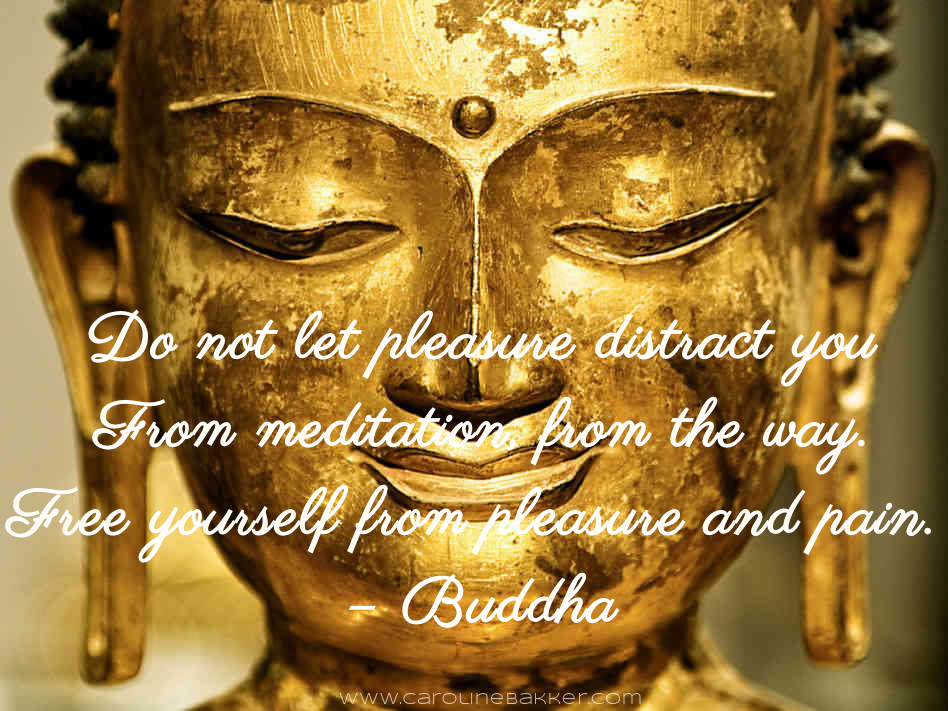
Buddha is a total peacemaker. This sense of calmness and peacefulness seems so hard to find for us as people, but with the right mind set and lots of practice and dedication, achieving that relaxed state of being may be attainable within reach. It basically has to do with emptying the mind in an effort to center the mind effectively and efficiently. This includes freeing your mind of insufficient and invaluable information that holds you in one place and inhibits your overall growth and potential prosperous advances.
We, as individuals, have the authority to actively partake in our destiny. We must take action and not passively look to our friends to guide us on our life's path. This concept is the true meaning of our lives. It is a sole conquest, where each soul is on a quest for purpose and meaning. This journey is a project that is individualistic, and must be applied to that particular person, but compared to nobody else.
Be you, be real ❤
So people these days tend to compare themselves to each other. Whether
it be their friends, family, siblings, or work associates. This kind of
character benefits nobody. Also, it creates needless tension that
manifests itself around you and your aura. It provokes this sense of
uncomfort within, likely to make you feel inferior and extra
competitive. Thus, we must not focus on out doing anyone. On the
contrary, we should learn to follow our own lives, and fulfill our own
destiny and desire. It makes no difference if you were to go look in
someone else's plate, for instance. We need to take responsibility for
what we have and build off from there. We must efficiently appreciate
our lives and not be upset about what other people have. They are living
their own lives, and you should live your life, on your terms. This is
the beauty of it. You can essentially only compare yourself to who you
were yesterday, and grow and evolve from there, accordingly. The main
take-away from this post would be to ultimately focus on your own
destiny truthfully and honestly and ignore the extra loud noises that
may tend to temporarily surround you. Just breathe, appreciate, and do
YOUR best to thrive and do good!
You have misconstrued my connotation!
Buddha is a total peacemaker. This sense of calmness and peacefulness seems so hard to find for us as people, but with the right mind set and lots of practice and dedication, achieving that relaxed state of being may be attainable within reach. It basically has to do with emptying the mind in an effort to center the mind effectively and efficiently. This includes freeing your mind of insufficient and invaluable information that holds you in one place and inhibits your overall growth and potential prosperous advances.
Buddhism tends to focus on the very aspect of remaining at the center of your core. This means not desiring so much that you go insane if you do not receive what you so desperately desire. On the contrary, this practice proposes one to accept and ultimately appreciate one's life overall. This will definitely take time and effort. Once this energy is revealed in a positive light, one will feel secure and at peace. That being said, we must aim to live for now, work on ourselves, do good, and work hard. The rest is basically out of our hands, so we should not try to control every aspect of our lives, which can really end up being an exhausting task without plausible results.
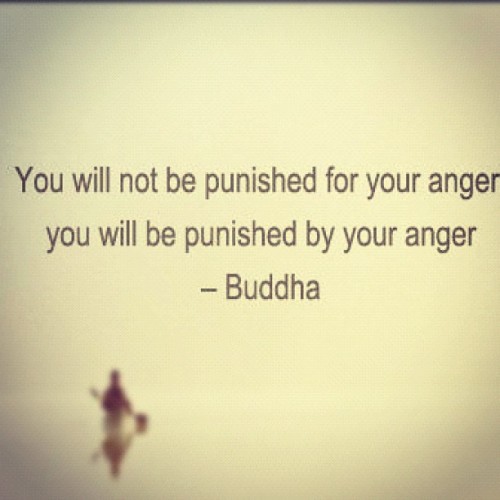
Still, we are humans, with feelings and desires. Therefore, with that comes frustration and anger once in a while. Our feelings get hurt and people have misunderstandings. However, if you take out any negativity towards your fellow people, either actively or passively, you might become angry later i your life, without ever realizing why. Therefore, your anger should teach you to take a step back and really think about what it is you are really upset about, and try and communicate these situations with somebody you love.
Be you, be real ❤
You have misconstrued my connotation!
Such a
familiar feeling these days, don't you agree? There are countless
misunderstandings where we simply do not "get" what the other person who
is speaking is specifically referring to. We get confused, angry, and
annoyed. While this continues to happen, we must alternatively remember
that we are human beings, who are not perfect. We make mistakes.
However, we would like to carry out the outward appearance of seeming
ideal to our fellow human beings. On the contrary, we should inevitably
learn to accept people's points of view. Thus, if we wish to get along
with others in a harmonious setting and manner, we should indubitably
strive to see things from our fellow people's perspectives, even as they
may be opposite to our beliefs. This is essentially is a gateway for
feeling more content with ourselves.
We should remember that by hearing
out the other person, we internally gain more knowledge and wisdom. The
fact is that no two people's perspectives are identical. There are
numerous ways to implore a given topic. In addition, it is our sole
responsibility, as human beings, to attempt to listen to those views in
an effort to treat others with respect and decency. This will minimize
or possibly eliminate the potential for arguments, as once we do not
comprehend the other persons motives, we get upset that they do not
match how we are thinking. So the next time you listen to someones
views and you initially disagree with them, open up your mind and learn
to be more accepting.
Just being aware of the fact that someone
perceives a topic in a diverging way than you will catapult you onto a
level where less arguments would arise and more peace would take place.
This will additionally evoke a sense of contentment on your part as you
will be able to get along better with other people. Finally, as a
result, you will feel more confident within yourself!
Subscribe to:
Posts (Atom)